💬
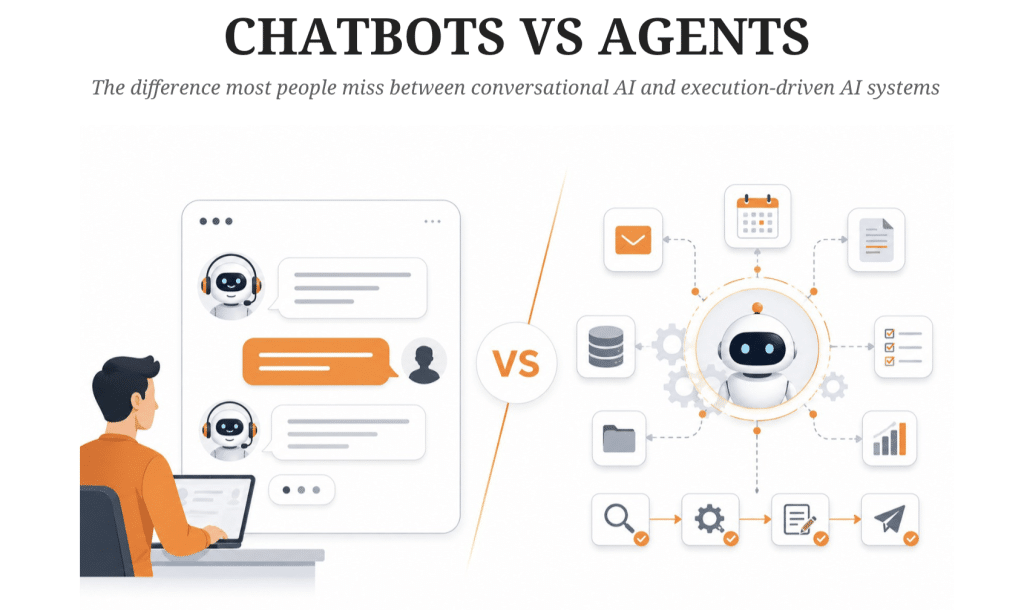
Chatbot
Conversation-first
Reactive
One exchange
Replies to you
VS
⚙️
Agent
Execution-first
Goal-oriented
Multi-step
Works for you
Most people assume chatbots and AI agents are the same thing. They are not. A chatbot talks with you. An agent works for you.
That distinction may sound subtle, but in practice it changes how AI creates value. It is the difference between asking AI to help draft one email and building a system that reads incoming emails, understands the request, checks internal data, drafts a response, updates a CRM, and alerts the right person. In short, one is assistance and the other is execution.
Chatbots are designed around conversation; agents are designed around outcomes. Understanding this difference is essential for anyone trying to move from simple AI experimentation toward real business impact.
Conversation-first
Execution-first
When many people hear the word AI, they immediately picture a chatbot: a simple interface where a user asks a question and the AI provides an answer. This is the most familiar form of AI because tools like ChatGPT made AI accessible through conversation.
That shift was powerful. It enabled millions of people to write, summarize, brainstorm, translate, and learn more efficiently. But it also shaped how people think about AI. They begin to assume that AI is only something you ask rather than something you can delegate work to.
That approach works well until the work becomes more complex. Real processes usually involve context, multiple systems, decisions, approvals, follow-ups, and several connected steps. A chatbot can help answer a question. An agent can help complete the task.
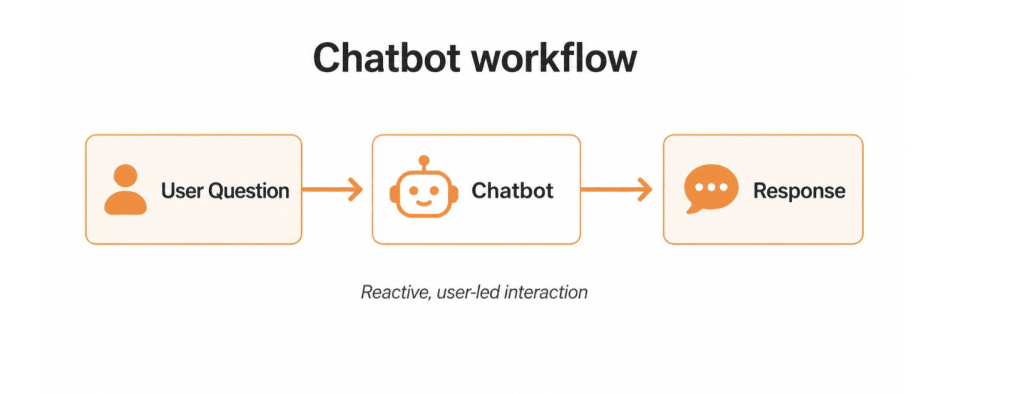
The simplest way to understand the distinction is this: chatbots are reactive, while agents are goal-oriented. A chatbot waits for a user message. An agent can receive a trigger, plan the next steps, use tools, and move work forward.
| Feature | Chatbot | Agent |
|---|---|---|
| Main Purpose | Conversation | Task Completion |
| User Role | Asks Questions | Defines Goals & Rules |
| AI Behavior | Responds | Plans, Acts, Follows Up |
| Tools | Usually Limited | APIs, Databases, Apps |
| Workflow | One Interaction | Multi-Step Execution |
| Best For | Support, Q&A | Automation & Ops |
A chatbot is ideal when the main need is communication. It can answer frequently asked questions, guide users through policies or procedures, explain product features, assist with internal support, and collect simple information.
For example, a customer support chatbot can ask for an order number, retrieve the delivery status, and respond with a helpful update. That is useful and efficient. It reduces manual work and improves the customer experience.
However, the chatbot still operates mainly inside the conversation. It waits for the user to provide inputs and typically handles one step at a time.
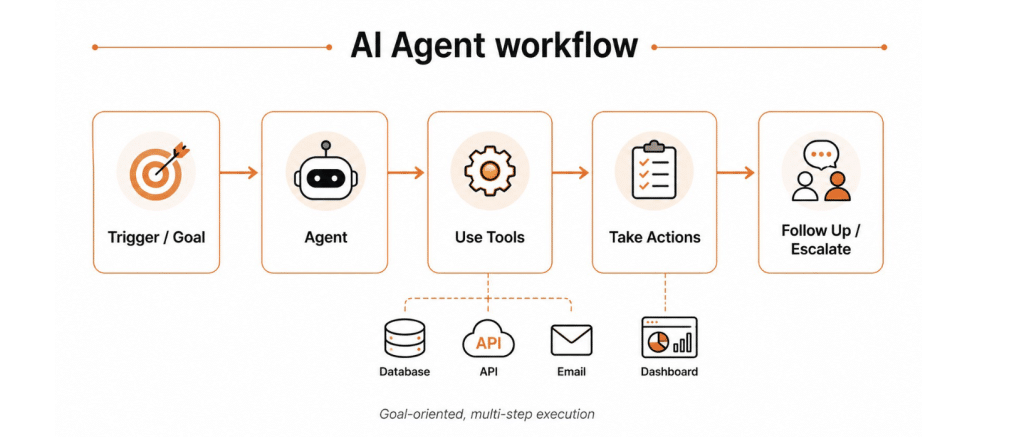
An AI agent is different because it does not stop at answering. It can receive a trigger or a goal, use tools, access information, make decisions within defined rules, take action, and continue until the work is completed or escalated.
Imagine an AI system that monitors incoming support tickets, classifies the request, checks a database, detects whether an order is delayed, drafts a tailored response, creates a refund request when necessary, updates the ticket status, and notifies the operations team. That is not just a conversation. That is a workflow being executed.
This is why an agent is not simply a better chatbot. It is a system designed to carry out work across
multiple steps
If you are building AI into your business, asking "should we use a chatbot or an agent?" is the right question. Chatbots reduce friction in communication. Agents reduce friction in execution. The real opportunity lies in knowing which one your challenge actually requires and building accordingly.