تواصل معنا

Inside ZAKA Ambassadors’ Claude AI Workshop with Rotaract

On August 17th, a diverse group of 50 people joined us for an evening exploring a question that is becoming increasingly relevant for students, professionals, and future leaders: How can we use Claude to work smarter?

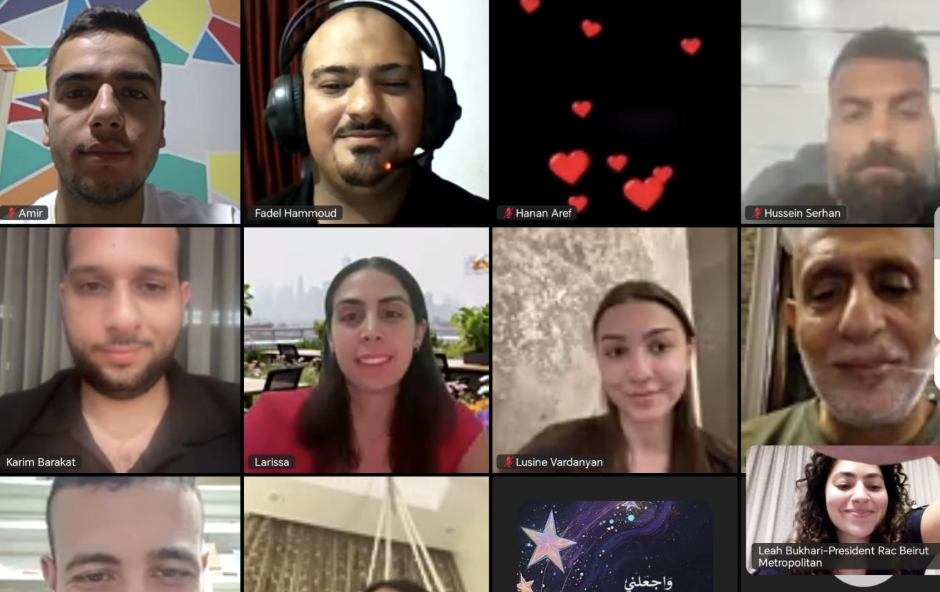
As part of the Technical ZAKA Ambassador community, Fadel Hammoud joined the Rotaract Clubs of Beirut Metropolitan, Alexandria Mariout Royal, and Yerevan for an international professional development session focused on Claude and its practical applications. The session entitles “The Claude Code – AI for Future Leaders”, took place online via Zoom, bringing together participants from different backgrounds to explore what Claude can do and how to use it effectively and responsibly.

Participants were interested in understanding where Claude fits into their work, studies, projects, and everyday lives. The goal of this session was to move beyond the question of “What is Claude?” and start answering the more useful question “What can I actually do with it?”


Getting to Know Claude

The session started with the fundamentals where participants were introduced to Claude and explored its capabilities across reading, writing, reasoning, analysis, creation, and coding. The session also explained how to use Claude through browsers, apps, and APIs. In addition, the discussion covered how technology has evolved from a conversational assistant into something closer to a  coworker.

The Responsible AI Conversation

But with greater capability comes greater responsibility. A significant part of the workshop focused on the responsible and safe use of AI, including why confidential information should not be shared with AI systems, the importance of verifying AI-generated information, considerations around copyright and attribution, potential bias, organizational policies, and the reality that AI systems can sometimes produce incorrect information. One of the central ideas introduced during the session was the Responsibility Triangle: Technology + Human Judgment + Clear Policies = Responsible Use. While AI can provide powerful assistance, the final responsibility for its use and the decisions made based on its output ultimately remains with the human user.

Putting It into Practice

The session concluded with a practical demonstration that moved from theory to real-world use cases. Together, we explored how Claude could be used to summarize long documents and articles, brainstorm ideas for projects and events, draft and refine content, explain complex topics in simple language, and create reusable artifacts and mini tools. The aim was to give participants practical examples they could take away and immediately experiment with on their own.

What We Took Away

For us as ZAKA Ambassadors, sessions like this are ultimately about community and practical AI education. AI is evolving rapidly but understanding it is not simply about knowing which tools are available; it is about learning how to use them effectively, recognizing their limitations, and making responsible decisions about where they belong in our work and daily lives. The Rotaract session gave us an opportunity to share this perspective with a diverse community of future leaders from different countries and backgrounds. After an evening of discussing prompts, AI assistants, and responsible AI use, the message we wanted participants to leave with was simple: Don’t just use AI. Learn how to work with it.

arArabic